Business Name: BeeHive Homes of Farmington
Address: 400 N Locke Ave, Farmington, NM 87401
Phone: (505) 591-7900
BeeHive Homes of Farmington
Beehive Homes of Farmington assisted living care is ideal for those who value their independence but require help with some of the activities of daily living. Residents enjoy 24-hour support, private bedrooms with baths, medication monitoring, home-cooked meals, housekeeping and laundry services, social activities and outings, and daily physical and mental exercise opportunities. Beehive Homes memory care services accommodates the growing number of seniors affected by memory loss and dementia. Beehive Homes offers respite (short-term) care for your loved one should the need arise. Whether help is needed after a surgery or illness, for vacation coverage, or just a break from the routine, respite care provides you peace of mind for any length of stay.
400 N Locke Ave, Farmington, NM 87401
Business Hours
Monday thru Sunday: 9:00am to 5:00pm
Facebook: https://www.facebook.com/BeeHiveHomesFarmington
YouTube: https://www.youtube.com/@WelcomeHomeBeeHiveHomes
Families hardly ever begin their look for senior care from a location of calm. More often, it follows a fall, a hospitalization, or months of quiet stress over whether a parent is truly coping in your home. By the time you begin inquiring about assisted living, memory care, or respite care, you are currently carrying a heavy load of feeling and urgency.
Choosing the ideal setting is not a matter of choosing from a menu of services. It has to do with matching one specific person, with a special history and character, to an environment that will safeguard their health while protecting as much self-reliance and self-respect as possible. That is particularly true when you are considering a smaller sized residential setting rather than a large, resort-style community.
Drawing on years of dealing with older adults and their households, I have actually seen small homes provide extraordinary care, and I have also seen circumstances where a larger, more structured environment was plainly the safer option. The art lies in informing which is which for your loved one.
What "assisted living" truly implies in practice
Families frequently presume assisted living is a standardized level of care. In reality, the term covers a wide spectrum.
At its core, assisted living suggests that an older adult lives in a monitored setting where staff provide assist with everyday activities such as bathing, dressing, medications, toileting, and meals, while the resident retains as much choice and self-direction as possible. It sits in the happy medium between completely independent living and the 24-hour medical support of an experienced nursing facility.
The main variables you see in practice are:
- Size and setting of the neighborhood Staffing levels and staff training Capacity to handle medical complexity Level of structure in day-to-day regimens Integration, or separation, of memory care services
A little home design assisted living, sometimes certified as a residential care home or board and care, typically serves 4 to 12 locals and feels more like a house than a facility. Bigger neighborhoods may house 50 to a number of hundred residents, with dining rooms, set up activities, and several care tiers on one campus.
Understanding which dimension matters most for your loved one is a better starting point than merely requesting for "the very best location in town."
Why smaller sized can feel "larger" in regards to care
When households envision their parent's next home, they frequently envision a calm, familiar environment instead of a busy complex. Smaller sized assisted living homes appeal for numerous reasons.
First, relationships are more immediate. In a home with eight locals, personnel can not help but know everybody's habits, preferences, and peculiarities. The caretaker who helps with your mother's breakfast is often the very same individual who notifications that her actions seem slower that week or that she is pushing her food around the plate rather than eating.
Second, routines can be more flexible. In lots of small homes, breakfast can really happen at 7:00 for the early bird and 9:30 for the late sleeper. Personnel can respond to a resident who chooses to bathe in the evening, or who likes to sit quietly before joining others. In a large building with numerous locals, schedules should be more standardized merely to function.
Third, the sensory environment is gentler. Older adults, especially those dealing with dementia, can be overwhelmed by crowds, consistent statements, and long corridors. A little home generally has less sound, less strangers moving in and out, and much shorter distances to navigate. For an individual who becomes disoriented quickly, that can significantly minimize stress and anxiety and confusion.

However, that intimacy has trade-offs. Smaller sized homes may have limited backup staff if somebody calls in sick, less on-site medical assistance, and less formal activities. You are trading some amenities and redundancy for personalization and familiarity. For some people, that trade is perfect. For others, it is risky.
Assisted living, memory care, respite care: what is the difference?
Families typically hear these terms from different experts without a clear description of how they overlap and diverge.
Assisted living concentrates on helping with day-to-day activities and fundamental health requirements, presuming the resident can still make many decisions, participate in their own care, and stay mainly safe with cueing and support.
Memory care is senior care that is particularly created for people living with Alzheimer's disease or other dementias who are at significant risk of roaming, disorientation, or behavioral changes. These units or homes generally have:
- Secured doors and outside areas More personnel training in dementia interaction and behavior management Simplified environments and visual hints to aid orientation More structured regimens to minimize confusion
Respite care is short-term residential care, often varying from a few days to a few weeks, planned to provide household caregivers a break or to offer short-term support after a hospitalization. Respite can be provided within an assisted living or memory care setting, or in an experienced nursing facility, depending on the individual's medical needs.
In a smaller home, these categories often mix. A residential care home might serve residents with moderate dementia and those without any cognitive problems, and may provide a spare space for respite stays when readily available. This versatility can be valuable, but it also indicates you must ask very specific questions about what the home will and will not do as your loved one's requirements change.
When a little home is a strong fit
Across lots of households I have worked with, specific profiles tend to flourish in a smaller assisted living environment.
A person who values a homelike rhythm and dislikes organizations typically does much better in a cottage with a cooking area that actually smells like cooking food, a pet dog sleeping in the corner, and familiar furnishings. Someone who has invested their life in single-family homes or studio apartments can discover a large, hotel-like building disorienting and impersonal.
Individuals with mild to moderate physical needs who still delight in conversation, hobbies, and light activities often find that small homes allow them to remain engaged without being overwhelmed. The personnel have time to sit at the table and chat while peeling veggies, or to notice when a resident is paging through old photos and sit next to them.
Those with early to mid-stage dementia, who become puzzled by large crowds or long hallways, often feel much safer and more settled in a smaller sized environment. Much shorter ranges to the bathroom, the kitchen, and their bed room minimize fall risk and improve continence simply since everything is easier to find.
Families who live nearby and are closely involved can also make outstanding use of a small home. When relatives visit routinely, supplement social contact, and keep a close eye on changes, the lighter official structure of a little setting ends up being less of a concern.
When a larger, more structured environment is safer
There are likewise clear situations where I advise households to think about a larger assisted living or devoted memory care community, even if the individual states they choose something "little and comfortable."
When medical requirements are intricate, such as frequent blood pressure checks, multiple insulin injections, high fall threat, or innovative heart or lung illness, the existence of full-time licensed nurses, on-site therapy, or ingrained centers can be crucial. Numerous little homes rely heavily on outdoors home health agencies and physicians, which operates in steady scenarios however can be delicate when conditions change quickly.
For individuals with advanced dementia who exhibit wandering, exit-seeking, or aggressive habits, a properly designed memory care system with protected yards, more personnel, and closer tracking is generally safer. These settings can also provide customized programs to reduce agitation and repeated behaviors, which is difficult to maintain consistently in a little residence.
People who yearn for range, gatherings, and facilities frequently value the energy of a bigger neighborhood. I keep in mind one retired instructor who moved from her long-time home into a little residential care home. She rapidly became bored and depressed, regardless of excellent care, since she missed out on the bustle of conferences, video games, and brand-new faces. When she transferred to a bigger assisted living with lecture series, a library, and an active resident council, she visibly brightened.
Finally, if your family lives far or has restricted bandwidth to visit frequently, a larger community's structured activities, volunteers, and chaplaincy or social work staff can provide additional layers of support that would otherwise fall to family.
Evaluating a little home: what really matters
Websites and pamphlets seldom catch the day-to-day reality of a small assisted living or memory care home. Walking through the door and asking grounded, particular questions makes a world of difference. A useful on-site checklist can help you keep your bearings.
List 1: Key concerns to ask when exploring a little assisted living home
- How lots of caretakers are usually on task throughout the day, night, and night, and what are their functions and training levels? What sort of medical needs can they safely manage in the home, and at what point would a resident requirement to move to a greater level of care? How are medications handled, who sets them up, and what safeguards exist to prevent missed out on or double dosages? What is the procedure in an emergency, including who calls 911, who accompanies the resident to the hospital, and how households are notified? How do they handle homeowners whose cognition or habits modifications gradually, particularly if dementia worsens?
The other half of the evaluation is less about formal responses and more about what you observe with your eyes, ears, and nose. Does your house odor clean, but not strongly of disinfectant? Are homeowners dressed appropriately for the time of day and the season? Do personnel speak to homeowners at eye level, utilizing their names, or do they scream directions across the room?
If possible, visit more than when, at different times. Late afternoon and early night typically reveal more than a mid-morning tour. See how staff deal with a resident who is uneasy or upset. Listen for laughter as much as for quiet.
Matching the home's culture to your loved one's habits
Matching care needs is essential, but not enough. Culture fit might be the factor that identifies whether your loved one not only stays safe but really feels at ease.
Think about the rhythms of their life. A former nurse who spent her profession on graveyard shift may always have been a late sleeper. Forcing her into an early breakfast schedule in a strictly run home will develop day-to-day friction. Look for settings versatile enough to honor her natural sleep and wake times.
Consider language and background. In some locations, little homes are run by households whose mother tongue is not English however who offer warm, attentive care. If they share a language or cultural background with your loved one, this can be a major benefit. If interaction will be limited, you will require to weigh the compromise between physical care quality and conversational engagement.
Pay attention to religious beliefs and values. Some little homes have a peaceful, devout environment with prayer before meals, spiritual art work on the walls, and a calendar developed around spiritual observances. For some homeowners, this feels like home. For others, particularly those who are non-religious or from a various faith, it can be alienating.
Finally, ask yourself whether the home's informal rules line up with your loved one's habits. Are they rigorous about no alcohol, or is an occasional glass of white wine with supper allowed? Can your parent keep their own phone or tablet and use it late during the night? Are animals present, and if so, does your loved one take pleasure in or fear animals?
These may look like small details on paper, but over months and years, they shape day-to-day contentment.
Cost truths and what "all inclusive" typically means
From a monetary perspective, smaller sized assisted living homes typically appear less expensive in the beginning glimpse than big communities, however the truth is more nuanced.
Most residential care homes charge a base rate that covers room, board, fundamental support with activities of daily living, utilities, and house cleaning. Some genuinely are all inclusive. Others add layers for greater care levels, incontinence materials, or extra hands-on assistance. Ask for a sample invoice, not just a rate sheet, to see how charges appear in practice.
Larger assisted living and memory care facilities commonly separate lease from care. A resident may pay a baseline month-to-month rent, then a "level of care" cost based upon a nursing evaluation. This charge may increase when physical or cognitive status changes. The initial number can be lower, but over one or two years, overall costs might go beyond those of a smaller sized home, especially for homeowners who require a great deal of assistance.
Insurance is another essential aspect. Traditional Medicare does not pay room and board in assisted living, whether large or small. Long-lasting care insurance might cover part of the daily cost, however only if the home fulfills the policy's requirements. Veterans' benefits, Medicaid waivers, and state programs vary commonly by region and regulatory category, often preferring certified assisted living facilities over little board and care homes, or the reverse.
If your resources are limited, ask early what takes place if your loved one runs out of funds. Some centers take part in Medicaid or state programs and can keep citizens after they spend down assets. Numerous little homes are private pay only and will require a relocation if money runs low. That does not imply you should avoid them, but you require a practical long-term plan.
Safety, danger, and the misconception of absolutely no danger
Families frequently ask which is "more secure": a small home, a large assisted living, or a memory care system. The more sincere answer is that every setting involves risk, since aging involves risk. What you look for is a sensible balance in between defense and autonomy.
In small homes, supervision can feel more consistent because staff and homeowners inhabit the exact same typical areas. A caregiver may notice a resident starting to stand incorrectly and action in to assist. On the other hand, smaller homes may do not have advanced fall-prevention innovation, on-site treatment, or rapid reaction teams.
Large communities can provide secured units, movement sensors, and more extensive training. Yet in a structure with lots of citizens, it is much easier for someone to stay quietly in their room and for subtle modifications to be missed, particularly if staffing ratios are stretched.
The key is to determine your main threats. For a loved one with sophisticated dementia and a history BeeHive Homes of Farmington senior care of attempting to leave the home in the evening, protected memory care is generally necessary. For a person with significant cardiac arrest who needs regular medication titration, close medical oversight is crucial. For somebody primarily frail and lonely, without any history of wandering or aggressiveness, a small, watchful home can be more protective than it appears on paper.
Families must likewise prepare themselves emotionally to accept recurring threat. Attempting to get rid of every possible danger frequently leads to unneeded limitation. The objective of senior care, whether identified assisted living or memory care, is not to create a perfectly regulated environment, but to enable a meaningful life within affordable safety.
Involving your loved one in the decision
Whenever cognition permits, your loved one ought to be involved in choosing their brand-new environment. Even when you must make the last call, including them respects their autonomy and provides time to adjust.
Bring them on tours when possible. Let them sit in the living-room, taste a meal, and meet future caregivers. Notification not just what they say, but how their body reacts. Do they unwind, smile, and talk about things they like, or do they grow tense and withdrawn?
Share alternatives in plain language. Instead of reciting functions, explain how life might feel. For instance, "Here meals are at set times in a dining room, with a great deal of individuals," versus, "Here you can consume in the kitchen area at the time you choose, with less individuals around." Older adults frequently comprehend compromises extremely clearly when framed in terms of everyday experience.
At the same time, be prepared to set gentle boundaries around impossible requests. A parent with significant care needs may insist they can still live entirely alone. Acknowledge their sensations and clarify the underlying values, such as personal privacy, control over regular, and location. Then search for the setting, little or big, that best honors those values while satisfying their care needs.
Using respite care to "test drive" a setting
One underused method is to set up a respite care remain in a little assisted living home or memory care unit before an irreversible relocation. This enables both your loved one and the staff to experience daily life together without a long commitment.
If your parent is recuperating from a healthcare facility stay or you as a family caregiver need a break, a 2 or three week respite stay can serve a dual function. You acquire peace of mind during a requiring period. At the exact same time, you gather concrete information: Does your loved one sleep better there? Do they take part social activities? How does their state of mind change?

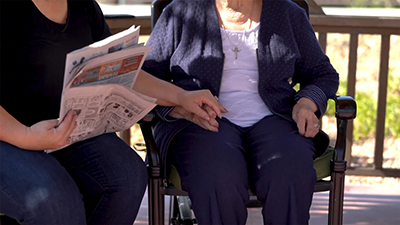
After the respite, talk frankly with personnel. They have actually now seen how your loved one handles toileting, medications, social interaction, and disappointment. Ask whether they feel the home is a sustainable fit, what they would prepare for as needs development, and whether they predict any barriers.
Some families are amazed. A resident who was withdrawn at home blossoms in a small, mindful environment. Others discover that care requirements are greater than expected, which a different level of senior care will be needed faster than anybody hoped. Both outcomes are valuable to understand before you sign a long-term agreement.
Red flags that deserve your attention
While no setting is best, particular warning signs throughout your search merit severe reflection and frequently additional investigation.
List 2: Warning when thinking about a small assisted living or memory care home
- High staff turnover, or personnel who appear unfamiliar with fundamental information about citizens and regimens Vague or evasive responses about licensing, assessment reports, or recent grievances from families or regulators Rushed, task-focused interactions with homeowners, with little eye contact or warmth Poorly maintained environment, frequent odors of urine or strong cover-up fragrances, or visible mess that might trigger falls Inconsistent stories about how emergencies are dealt with, or unwillingness to let you speak with present households
If you come across one of these indications, you do not necessarily require to cross the home off your list immediately, but you should continue meticulously. Ask follow-up concerns, request to review evaluation reports, and consider consulting with a doctor, social employee, or care manager who understands local centers well.
Facing the psychological weight of the decision
Beyond checklists and expenses, choosing a little assisted living or memory care setting is an emotional crossing for families. It frequently seems like a reversal of roles, with adult children making choices for the parent who when made every choice for them.
Recognize that guilt, grief, and doubt belong to this procedure, even when you are making a sound, loving choice. I have actually sat with numerous kids and children who felt that moving their parent to assisted living suggested they had actually failed in some method. Yet I have also seen caretakers collapse from exhaustion, or make harmful errors with medications and transfers, due to the fact that they attempted to do whatever in the house, alone.
The best environment, large or small, does not replace household. It enters into the circle of care. When a little home fits well, it permits you to return more completely to your function as boy, child, or spouse, instead of full-time nurse and house cleaner. Your visits can move from constant caution to shared meals, old stories, and simple presence.
A cautious, thoughtful search, grounded in sincere assessment of needs and values, is an act of respect. You are not simply discovering a center. You are selecting the next home in your loved one's life story, one that, with luck and excellent care, can be both little in size and generous in the comfort it provides.
BeeHive Homes of Farmington provides assisted living care
BeeHive Homes of Farmington provides memory care services
BeeHive Homes of Farmington provides respite care services
BeeHive Homes of Farmington supports assistance with bathing and grooming
BeeHive Homes of Farmington offers private bedrooms with private bathrooms
BeeHive Homes of Farmington provides medication monitoring and documentation
BeeHive Homes of Farmington serves dietitian-approved meals
BeeHive Homes of Farmington provides housekeeping services
BeeHive Homes of Farmington provides laundry services
BeeHive Homes of Farmington offers community dining and social engagement activities
BeeHive Homes of Farmington features life enrichment activities
BeeHive Homes of Farmington supports personal care assistance during meals and daily routines
BeeHive Homes of Farmington promotes frequent physical and mental exercise opportunities
BeeHive Homes of Farmington provides a home-like residential environment
BeeHive Homes of Farmington creates customized care plans as residents’ needs change
BeeHive Homes of Farmington assesses individual resident care needs
BeeHive Homes of Farmington accepts private pay and long-term care insurance
BeeHive Homes of Farmington assists qualified veterans with Aid and Attendance benefits
BeeHive Homes of Farmington encourages meaningful resident-to-staff relationships
BeeHive Homes of Farmington delivers compassionate, attentive senior care focused on dignity and comfort
BeeHive Homes of Farmington has a phone number of (505) 591-7900
BeeHive Homes of Farmington has an address of 400 N Locke Ave, Farmington, NM 87401
BeeHive Homes of Farmington has a website https://beehivehomes.com/locations/farmington/
BeeHive Homes of Farmington has Google Maps listing https://maps.app.goo.gl/pYJKDtNznRqDSEHc7
BeeHive Homes of Farmington has Facebook page https://www.facebook.com/BeeHiveHomesFarmington
BeeHive Homes of Farmington has an YouTube page https://www.youtube.com/@WelcomeHomeBeeHiveHomes
BeeHive Homes of Farmington won Top Assisted Living Home 2025
BeeHive Homes of Farmington earned Best Customer Service Award 2024
BeeHive Homes of Farmington placed 1st for Senior Living Communities 2025
People Also Ask about BeeHive Homes of Farmington
What is BeeHive Homes of Farmington Living monthly room rate?
The rate depends on the level of care that is needed (see Pricing Guide above). We do a pre-admission evaluation for each resident to determine the level of care needed. The monthly rate is based on this evaluation. There are no hidden costs or fees
Can residents stay in BeeHive Homes until the end of their life?
Usually yes. There are exceptions, such as when there are safety issues with the resident, or they need 24 hour skilled nursing services
Do we have a nurse on staff?
Yes. Our administrator at the Farmington BeeHive is a registered nurse and on-premise 40 hours/week. In addition, we have an on-call nurse for any after-hours needs
What are BeeHive Homes’ visiting hours?
Visiting hours are adjusted to accommodate the families and the resident’s needs… just not too early or too late
Do we have couple’s rooms available?
Yes, each home has rooms designed to accommodate couples. Please ask about the availability of these rooms
Where is BeeHive Homes of Farmington located?
BeeHive Homes of Farmington is conveniently located at 400 N Locke Ave, Farmington, NM 87401. You can easily find directions on Google Maps or call at (505) 591-7900 Monday through Sunday 9:00am to 5:00pm
How can I contact BeeHive Homes of Farmington?
You can contact BeeHive Homes of Farmington by phone at: (505) 591-7900, visit their website at https://beehivehomes.com/locations/farmington/,or connect on social media via Facebook or YouTube
Conveniently located near Beehive Homes of Farmington Allen Theaters a great movie theater with full food & drink menu. Catch a movie and enjoy some great food while you wait.